Showing posts with label Review. Show all posts

Top 10 Methods of straightening Review: Product and Straighteners Listen

Pin straight hair smooth, shiny appearance, there are various ways to create many. The correction of any of the top ten methods of hair is in a special way. You will find here straightening hair straightening hair products and a method for straightening hair will be easier to.

  1. Shampoo and Conditioner: no hair to help to correct the market today, many shampoos and conditioners, but should be used in combination with other products. Heat-drying or ironing to look for products that can help protect your hair and make sure you choose a very good conditioner.
Read full Article >>

Rump steak, anyone?

Raja Sen reviewing 7 Khoon Maaf on Rediff.com writes about Priyanka Chopra:
Eyes well up with hurt, thick lips quiver in pouty indignation, and subtlety is thrown to the hounds as the actress flounders, trapped inside a bewildering character significantly out of her league.. Priyanka tries her best, but is simply not a good enough actress to justify being in a role this nuanced and demanding. It is a fantastic character, one deserving of a Sofia Loren or a Penelope Cruz or a Waheeda Rahman, and try as Ms Chopra might, she never comes close to being convincing. She turns hints into signals, happiness into hysterics, her every movement an act. She looks her best when sternly strutting into a hospital, occasionally gets a line right, and her acting highlight comes with her resigned yet in-control body language as she sees off Annu Kapoor to his car. Yet these are but a few swallows, and she's an actress unworthy of this season.
If I was Priyanka Chopra, and I read a review like this, probably I would look for a hole where I can hide and lick my wounds. And, probably, I won't come out of the hole for along time. Fortunately for her, other film reviewers, though not very happy with the film itself, are not unhappy with her performance. Like Taran Adarsh on Bollywood Hungama who has written:
Always ready to accept challenges in her career [AITRAAZ, YAKEEN, FASHION] and raising the bar with her performances, Priyanka accepts the challenge to portray ages from 21 to 65 in 7 KHOON MAAF. It must've been an arduous task to get the different age-groups right, but she proves her infinite acting potential yet again. Known to be an actress who stays true to every character that she is portraying, Priyanka delivers yet another sparkling, award worthy performance this time. There are several love-making sequences with her husbands and Priyanka has handled those [bold] sequences without inhibitions... Ideally, I would've given a two star rating for this film, but I am going ahead with an extra star for Priyanka Chopra's sterling performance!
Other critics may not be so gushing, but they have liked PC. Here are some more examples of critics' opinions about PC.

Namrata Joshi on her blog on Outlook, writes: "Priyanka, confident but made to age abruptly with bad, patchy makeup... "

Mayank Shekhar on Hindustan Times is happy with her performance, "For Priyanka Chopra, who plays the Anglo-Indian protagonist, this is unquestionably a role of a lifetime. She has you by the eyeballs. So does most of the movie."

Rajeev Masand from IBN is dismissive towards the movie but accepts that PC tries her best, "Priyanka Chopra dives courageously into her role, sacrificing vanity and pride to play Susanna at different ages of her life and in often humiliating conditions."

Appreciating art, like the person you fall in love with, and probably like pretty much else in life, is something unexplicable, irrational. Therefore, even if the whole world including the professors of Pune Film and TV Insitute, give a gold medal to PC for her work in 7 Khoon Maaf, I think Raja Sen has every right to continue to feel that PC was not just good enough in the movie.

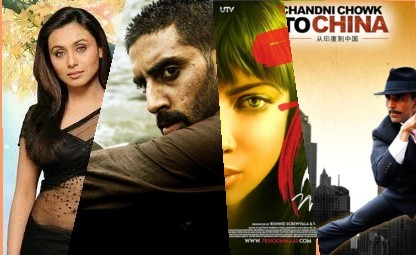
However, it made me reflect about the press coverage all famous actors and directors, sooner or later get and how they deal with it. For example, I remember reading some terrible stories about Rani Mukherjee some years ago. I also remember some of the reviews about Abhishekh Bacchan in Raavan and about Akshay Kumar in Chandni Chowk to China. Actually when they are praising you most, they are also getting ready to pull you down most brutally. Thinking of all the adulation Aamir Khan has received over past few years, I am just waiting to read the kind of bad press he is going to get, the day one of his movie is unsuccessful, how he doesn't understand movie-making, etc.

collage of different films

Everybody knows that movie business is a savage business. The industry forgets you, the day you stop selling. When that happens, film journalists are waiting, ready to pounce on you and sink their teeth in your flesh. The more successful you were, more vicious will be their attacks.

Of course it is not something new. Romans had the colosseum where you had to fight it out with the lions and talibans have public executions where you can take a stone and smash a person's head. All societies have such ways of public fun. We have our actors and directors.

However, I was wondering, how do these actors and directors deal with these kind of stories or reviews? Working in films is considered as glamour, with thousands (or is it millions) of hopefuls dreaming on the sidelines to become famous.  But I think that it must be incredibly stressful.

A big high profile film coming out seems to me like a Board examination. Actually it is worse than that, as there will be different marksheets about the same work. Even if some give you a gold medal, there will be others that will fail you.

How would you deal with it? I can't imagine myself putting in months of hard work and then put myself with my butt in the air, so that critics can do their knife throwing practice on me, carving out rump steaks, if they so desire.

In my office, if I give judgements like this on my colleagues or subordinates, probably I will be hauled before a labour tribunal and told to pay damages. You are suppose to respect human dignity of your fellow workers. Even film critics must be asking for dignified treatment from their bosses and their colleagues, where they work. But all these rules don't apply to public figures and artists, who can be mocked at will, their work can be laughed at.

The more vicious you are in criticising, more people will come to read you. For all the frustrations of our lives, we need to see persons who can be kicked at till they bleed. If they are richer, more famous and more beautiful/handsome than us, the better we feel.

So perhaps the trick is not to take it too personally! That review is not about you. It is about us. Just chill and enjoy your fame while it lasts.

***

The hero and the villain

I like mystery stories in books and films. When you start with them, you already know that the author/director is going to plant red herrings along the way, and you have to constantly second guess them, and not to get distracted. Finally when you are able to guess the plot and the mystery near the end, or when the author/director manage to surprise you in the end, it can be very satisfying.

In Ravan, director Mani Ratnam behaves in the same way. He makes you think that you are going to watch a certain kind of movie, while showing you a completely different one.

Yes, finally I saw Mani Ratnam’s Ravan. And I loved second guessing his motives while making this movie, and I loved that he managed to surprise me in the end.

The reviews of the film were so harsh, especially about Abhishekh Bacchan. They said things like “he has single handedly destroyed this film”. Some people have even watched both the versions of the film (Tamil and Hindi) and are all praises for Vikram in the Tamil version, and thus, the condemnation for Abhishekh Bacchan seems even harsher.

I am not very fond of the Junior Bacchan. But after reading all those reviews I was left wondering if Abhishekh was so clearly bad in that film, how come the director and the different technicians couldn’t make it out while they were shooting the film or editing it? After watching the film, I feel that Abhishekh was good in the film, not exceptionally great, but good enough for Mani to plant his red herrings and create confusion.

Mani Ratnam's Ravan

For the last few years, I find difficult to sit through most bollywood films. So, after reading all the reviews and comments about Ravan, I had first thought that I will not watch Ravan. Then after some time, I thought about Mani's other film, Yuva. I had loved it and I had loved Abhishekh in it, so I decided that I had to find out for myself, how could both Mani and Abhishekh get it so completely wrong like the reviews seemed to suggest?

I didn’t like the beginning of Ravan. A collage of shots mixing up Beera (Abhishekh) standing on the top of the cliff, the policeman (Vikram) giving the speech in some military academy kind of place and the porcelain beauty (Aishwarya) on the boat getting kidnapped, looked pretentious and tiring. Perhaps Mani sir is too high on pretentious camera angles and confusing techniques, and that is why ordinary viewers have been put off by this film, I had thought.

Yet, within ten minutes I was hooked by the film, and watched it till the end without feeling bored for a moment. I think that it is a clever film with Mani Ratnam playing with the human biases and using them to cheat & confuse the viewers. Very thought provoking. However, may be I can understand, why it may seem off-putting and tiring to most viewers.

The archetypal revenge stories of Bollywood: The basic story of the film is nothing new and has been shown many times on Indian screens in many variations.

The revenge story involving cops has two main versions:

(1) Poor ordinary man and the corrupt cop story: The poor good guy is the hero and corrupt power-mad cop is the villain. The villain kidnaps and rapes the good guy’s sister/wife and the good guy takes up arms for revenge. At the end of the film, the villain is thrashed, jailed or killed.

(2) The honest cop and cruel ganglord story: An honest cop is the good guy. Somehow he manages to irritate the hoodlum. For revenge the hoodlum decides to teach the policeman a lesson and kills his family or kidnaps his wife/sister and rapes her. The honest police officer, goes after the hoodlum and in the end, kills him.

Mani takes these two versions of the story and mixes them up. The film starts as the type 2 story, that is “honest cop versus cruel ganglord” story, with kidnapping of honest cop’s (Vikram) wife (Aishwarya) by the cruel ganglord (Abhishekh). Almost halfway through the film, you realise that perhaps it is type 1 story, a “poor ordinary man and the corrupt power-hungry cop” story. However, Mani continues to create confusion by planting his red herrings.

Mani Ratnam’s question to the viewers seems to be: are you sure that you are supporting the right and the just side or you are letting your inherent human biases guide your feelings for the wrong side? I think that this question is very topical if you think of some issue of contemporary India like big dams, exploitation of tribals, beneficiaries of economic development, etc. It seems that if you have nice names like Vedanta or if you can use nice words like development and "India the new super-power", you can get away with exploitation, destroying the homelands of rural poor and triabls and worse. Mani uses similar techniques – mythology, looks, names to create a hero and a villain, who are not what they seem to be.

Story: On one hand there is a local tribal hoodlum, a kind of Robin hood helping poor oppressed tribal villagers. Other tribals, poor and uneducated people say good things about him (“He is like water, transparent”). He is secure in his world, not worrying about the new police officer appointed to his district and is busy in his siter’s wedding, whom he loves because “she is the independent kind, the kind who stands up to him”. He is probably a small time local crook, as there are no armed guards protecting him.

On the other hand, you have an ambitious police officer, appointed to a district, who decides to shot at the unarmed local hoodlum-Robinhood, while he is busy with kanyadaan of his sister. It is a little strange that hoodlum is loved by locals, yet police can come to his village, to his sisters' marriage and yet he and his men are completely unaware about it. This also points to his being a small local fish. Police officer's brother and other policemen, take the bride to the police station and rape her. The smart police officer, must have been aware of that? He has a nice looking wife, and when she is kidnapped by the men of the hoodlum, he goes after the tribal gang, refusing any comprise, killing as many as he can.

Treatment: Mani Ratnam takes the ordinary man versus corrupt power-hungry cop story except that he doesn't explain much about the motives of the cop and uses all the tricks to confound the viewers, so that cop is treated like a hero and the poor man like a villain.

Tribals in the film are not the cute bum-shaking, singing villagers of Bollywood, they have mud, ash or yellow paste of haldi streaked on their faces. Their clothes have black streaks, their eyes are circled with black, to make you think of devil or Shiva’s Yam-doots. Beera is made to look repulsive. He even mentions that he has ten heads like the demon king Ravan. He also has a habit of changing his expressions, and usually ends up with a crazy glint in his eyes. Just in case you didn’t get it, his hands move on his head like wings of a fluttering bird, making you feel that he is mentally unstable.

Mani Ratnam's Ravan

The other guy (Vikram) is macho, good looking, educated, apparently in love with his beautiful wife, a regular city guy, a hero material. His wife is cute, does lovely dances, surrounded by small children. His name is Dev, and there are different indications that he is like Ram from Ramayana. His relationship with his younger brother (Nikhil Diwedi) reminds you of Ram-Lakshman relationship. If you still had any doubts, there is Sanjeevani (Govinda), the forest guard who makes you think of Hanuman from the way he climbs on the top of roof-tops and swings from one tree to another.

When the film starts and you feel that it is story number two, the honest Ram like policeman fighting for his honour, fighting the cruel uneducated tribal bad man to save his beloved wife. As the film moves, the lines between good and bad are constantly blurred and only when the Jamuna (Priyamani) story comes out, some doubt creeps in and you start thinking that perhaps the cops are not the good side in this film.

Even then Mani Ratnam does not make it easy for you. Events unfold in such a way that every time you can feel a twinge of sympathy for the poor Beera, the director makes sure that you feel a little repulsed about him, by playing with the prejudices of urban film goers about rural unkempt, mentally ill, black and ugly uneducated persons. He plays dirty by highlighting everything that can look bad for Beera.

It is only at the end that you understand the way the policeman manipulates everything cold bloodedly, uses even his wife and her emotions, to get his own way. He does not hesitate from trapping and killing Beera, even while he knows that Beera has been good to his wife and has even spared/saved his own life. May be in the background you have some mining company or some other big company, who want the tribal boy out of the way, but Mani does not tell you about it.

I think that Abhishekh is brilliant and courageous for accepting to come out so strongly in being repulsive and crazy. Actually I liked everyone in the film, except may be for Aishwarya Rai. She does try hard enough, but she does not create electricty with Abhishekh, their vibes are not hot. I would have preferred someone more earthy and intense like Rani Mukherjee, the way she had portrayed Sashi in Yuva. Or Nandita Das or Konkana Sen. Aishwarya looks beautiful, but she vibes better with Vikram, like in the dancing song, “Khili re”. And she doesn’t fit with the wild jungle and thumping waterfall (photographed beautifully).

Mani Ratnam's Ravan

The week points about characterization of Beera (Abhishekh) are his hands, his legs, his teeth. His fingers seem too well kept, clean and manicured, and his teeth too white for being the tribal ganglord. I also felt that Mani went a little overboard in asking for his repulsive makeup. Like, in the dance “Thok de killi” with blacks streaking his clothes and around his eyes, looked too theatrical and obvious.

Some parts of the film, like the whole sequence at the end, with Ragini (Aishwarya) getting down from the train, coming to look for Beera, their meeting at the cliff top and their getting surrounded by police, seem very implausible. What kind of villain is this? He comes without a gun, does not even know that hundreds of policemen are following the woman in his jungle? But looking for that kind of logic does not help to appreciate the film. In any case, I think that the film was not about logic or believability of the story, but about archetypes of good and bad in Indian unconsciousness, and using them to raise questions about our inner prejudices.

I feel that with this film, Mani Ratnam throws a challenge at the viewers, that he will turn upside down your ideas about the hero and villain, he won’t let you identify with the hero, and then he seems to ask, tell me does it make you uneasy? Going by the general response to the film, it seems film goers have taken him on his words.

Think of Yuva, by no stretch of imagination, you can call Lallan a good person, yet in Yuva you can understand his compulsions and even identify with him. In Ravan, Beera is a much better character compared to Lallan, yet Mani does not let you feel any empathy for him. That required courage or may be it was foolishness? In my opinion, he does merit an accolade for making such a thought provoking film about how we make assumptions on superficial grounds about people and classify them as good or bad.

I don’t think that the Ram or Ravan of the film are in any way about Ram or Ravan of Ramayana. But rather, film uses ideas about Ram and Ravan to create confusion in our minds, to make it more difficult for us to decide who is good and who is bad. Yet, if I think of the scene where Nikhil Diwedi pulls at Priyamani’s nose at the wedding mandap and then she is gang raped by the policemen, it creats some unease in my mind. Is Ramayan also talking about something more sinister when it says Lakshman cut Surpanakha’s nose, I ask myself. Or may be I am reading too much in what Mani Ratnam wanted to say and provoke with Ravan?

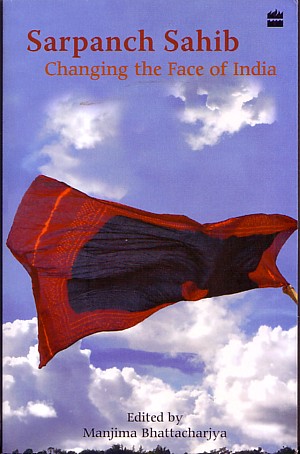
Women changing rural India: Sarpanch Sahib

Common perception is that in spite of poverty and under-development, women in South Asia have played a much more active role in leadership and politics of their countries and their communities than in the western “developed” world. Persons like Sirimavo Bhandaranayike, Indira Gandhi, Sheikh Hasina, Benazir Bhutto, Mayawati and Aung San Kyi are responsible for this common perception. Yet, those who know the reality of our world, know that for most women, especially in rural areas, their lives are often closed in the boundaries of traditions, hidden behind veils, bound by rules of caste and class.

India started an experiment in 1993 to change this apparently immutable world of rural women by reserving certain election seats at village council level (Gram Panchayats) for them. At that time, many persons had thought that this would not change anything, men will continue to decide and rule as usual, using their wives or mothers or daughter-in-laws as a cover.

Initially almost all the women who entered the poltical arena because of this policy, were in some way forced by their families. Most of them did not receive any training for the roles they were asked to take on. Almost fifteen years later, it is perhaps time to take stock and understand how this change has worked out in practice and if indeed there has been a change?

Yes, in spite of all the cynicism and active obstruction by old political power-brokers, the experiment has started to bring about a change. “Sarpanch Sahib – Changing the face of India”, edited by Manjima Bhattacharjya (Harper Collins India with India Today and The Hunger Project, 2009), tells the stories of some such women who became presidents of their Gram Panchayats (village councils).


The stories of the book are told by women like Manju Kapur, Indira Maya Ganesh, etc. and are immensely readable. They talk of villages from different parts of India. To understand what these women went through and continue to pass through, what it means for them to live lives of poverty and yet strive for better governance against all odds, makes for a humbling experience.

I liked all the stories. They are succcess stories, even if they show that nothing is easy and at times, the idea of “success” does not quite express what they have achieved. They show that change in the unchanging world of rural poverty, could be almost imperceptible. Like the story of a person like Kenchamma, a dalit woman, who continues to shell betel nuts for a living, even while she is into her second term in the Gram Panchayat. Like this passage from her story:
Quite far removed from the Kenchamma of 1993, who cried in humiliation as she returned from her first meetings, bewildered and frustated at not being able to say anything. We were walking through the village and my eyes fall on her callused hands. She points to the skin of betel nut strewn in piles every where. She did four sacks yesterday. At 50 rupees a box she makes 200 rupees for the day. ...An uneducated Dalit woman has done for her village what seasoned political aspirants have not. But what has she got in return? What does one make of this strange sort of limbo? Thins have changed so much over one generation – from Cariappa’s to his daughter-in-law’s, yet they remain disturbingly unchanged.
Kenchamma has been president of the panchayat twice and is now a grudgingly respected member of the village community – respected by Dailts and Lingayats. But she is still a poor Dalit woman. As if being any other way would be improper. Improper not to live in a thatched, leaking mud hut, or to plaster her house, to not struggle for daily wages, improper to imagine other livelihoods, work not just for the village but make a career out of governance and use the 10 years of hands-on learning she has had. The boundaries have been pushed, but still only from the limits of the home to the village. Isn’t it enough that you have been allowed to reach this far, the voices seem to suggest?
I think that Kenchammas of this world are wise, they know that entrenched social hierarchies can react back with terrible fury if they feel that the status quo is being challenged. They know that they can not count on any one else to protect them. So they bide their time, they accept to continue to living lives of poverty and marginalisation, even while achieving small changes, providing education for their children. They are not aiming for revolutions, they are aiming for a change. Most of us from worlds far away from theirs, including many development experts, are frustrated with this path of slow change.

Perhaps we, or some of us, would have preferred revolutions?

I would recommend this book to everyone, especially those who think that they know India, that they are building the modern new India, that they are bringing in the progress. It would bring a sense of balance in what they think about themselves and gain some respect for those Kanchammas, working in far away places to bring small changes in rural India, taking personal risks that most of us wouldn't have the courage to take.

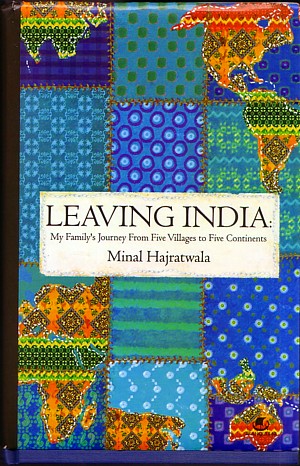
Migrating souls: Leaving India by Minal Hajratwala

Books and stories that talk about immigrant experience fascinate me. Stories about Indian immigrant experience, their second generations in their new homelands, fascinate me even more. I have realised that when I read them, I talk to myself all the time.


At one place in the book, Minal says, “Deep in the marrow of every story is a silence”. Perhaps, it is there, in that silence, that the reader and the author can meet and talk, about what was left unsaid and what can not be expressed in words. In that sense, it was particularly hard to read “Leaving India – my family’s journey from five villages to five continents”, because our parallel dialogue in that silence was at times so intense.

When I start realising that I am liking a book and that I would like to write about that it, I start bending the corners of those pages that have particular passages that touch me in a special way, so that when I write I go back and refer to those particular passages.

In “Leaving India”, I have marked so many pages, that if I try to write all the feeling they evoke in me, probably I will end up writing a bigger book. So I will not even attempt to write all those things.

I read it almost in one go, over a period of three days. And, I had to stop myself at times, to put aside the book and go for a small walk, just to think, and also to prolong the joy of reading it.

Minal’s family’s journey starts from five villages in south Gujarat, at a time when there was no state called “Gujarat”, in late nineteenth century. Poverty and dreams of making a mark in far away parts of the British empire, take away the men, leaving their wives with their children in Gujarat. Slowly, the wives also follow their husbands and then as fortunes of the empire change, and new opportunties arise, the emigrants change homes, searching for more hospitable lands where they can grow their families in peace and dignity.

Among all the stories, the one which touched me most was the story of Bhupendra and Bhanu, Minal’s parents, probably because I could empathise and understand more the kind of problems they went through. Among all the pages that I had marked, I have decided to take one passage from this part of the book that touches on the challenges and opportunities that emigration experience can give us:
In New Zealand, Bhanu might have become small and huddled; our lives there were always slightly shabby, as if the gray of the skies had settled over our skins, clothes, hopes. In Fiji, she would have been one of the several daughter-in-law, bickering for position in a chaotic and quarrelsome extended family. In India she could have lived a life of middle– or upper-class privilege, with ahousehold of maids to supervise.
In America my mother bloomed like a tropical flower, colourful, with a thick, strong stem, petals as sturdy as bark....
Slowly we became – all four of us – American. For Bhupendra and Bhanu this would become clearer with each visit to India or Fiji. Although they tried to blend in, to do as the locals did, the mask was less and less perfect. The changes were physiological: they oculd not drink the water, had to be careful about what they ate ... The changes were also psychological. They found they simply could not understand why certain things were as they were, how people could stand to live that way.
You don’t need to move to USA to realise that you have changed. Shifting from Patna to Delhi or Mumbai can change you equally. Going to university, living on your own, every change marks your difference. In that sense, you don’t need to be an emigrant to understand what Minal is writing about.

Minal’s own journey as a second generation emigrant growing up in USA, was also interesting since through it I could imagine a dialogue with my son and see his growing up experinece. He himself would never talk of such things with me, and unless he decides to write a book about himself one day, I have no way to enter that world.

Minal’s own journey is much tougher, I think, compared to my son’s journey, since it is linked to her struggle to live her sexuality that doesn’t fit in with the heterosexual “normality” of the traditional family.

As the world globalises, I think that Minal Hazratwala’s book tells a story that is more universal, that can be understood and felt by all those who move away from the places where they grew up, from villages to the cities, from one country to another.

LEAVING INDIA, My Family’s Journey From Five Villages to Five Continents, by Minal Hajratwala, 2008, published by Houghton Mifftin Harcourt company USA e Tranquebar press India.

Sonagachi prostitute and the yellow turbaned Sarpanch

Have you seen the posts on India Yatra series on the Hindustan Times webpage? I think they are wonderful in getting a feel of India as it readies for the 2009 elections.

The yellow turbaned Sarpanch in the Maharashtra village has a masters degree and practices participatory democracy and development, bringing prosperty to the village and to them the national elections are not so important, the Gram Sabha is much more so.

Durbar, the NGO set up by a group of prostitutes from Sonagachi in Kolkatta is the only organisation providing support to the tribals in an area that saw starvation deaths. To those tribals, the politicians mean nothing, they only see hope in Durbar.

In UP the internet surfing farmer is a millionaire and is providing new agricutlure knowledge to many other farmers. To them the new eight lane highway that is coming up next to their village is their road to prosperity and rather than look at the Ram mandir issue in Ayodhya, they would rather look westwards to Punjab, Haryana and Maharasthra for better agriculture.

In Andhra Pradesh, the world-class road is just a confirmation of the State priority in fighting the Naxalites and it fuels the desire for the separate Telangana state. Prosperity will come with their own state, they are convinced. People are calculating which politicians are likely to support them to realise their Telangana dream.

In Bihar the bicycles for the high school girls may be another round of chess moves between Nitish Kumar, Ram Vilas Paswan and Lalu Prasad, but girls are feeling more confident and see a hope for their future.

These are some of the examples of the stories under India Yatra.

HT has 30 correspondents travelling all over India and collecting stories from places that usually are forgotten in newspapers and TV news. It gives me an opportunity to go beyond the usual media representations of India, to a more varied mosaic of the country. Great stuff and interesting as well.

Boundries of forbidden Love

I was chatting with an Italian friend. Somehow those discussions had lead to some talk about our first crushes. I suddenly remembered about the time in India when I had just started to go to university and how I had adored my cousin brother’s fiancee.

“I used to think that she was the most beautiful girl in the world and even now, after almost forty years, I still feel that she is very beautiful”, I had said.

Perhaps it was something in my voice or my expression. My friend had laughed and asked, “So you were in love with her! And did you ever get intimate with her or was it just loving her from a distance and fantasising about getting into bed with her?”

Suddenly I was very angry and offended at her question. I had not said anything to her, suddenly deciding that it was late and I had to go.

“How dare she insinuate that my adoration was not pure and that there was any element of lust in my feelings for Bhabhi”, I had thought after saying goodbye to my friend, “these Europeans they can’t have any pure relationships, they need to dirty everything, nothing is sacred for them.”

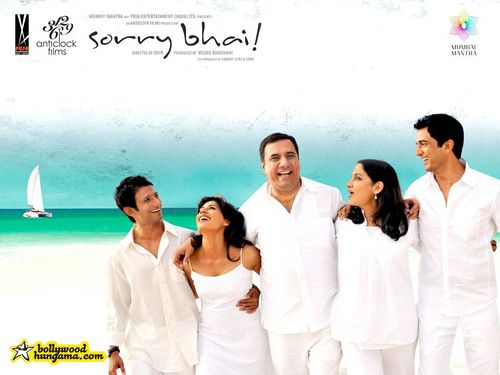
I remembered this episode when yesterday I saw “Sorry Bhai”, the new film by Onir.


There were some scenes in the film, especially the love making scene between Sharman Joshi and Chitrangada Singh in the changing room of a clothes shop, which really disturbed me and I was squiriming on my seat, trying to not to look at the film during those scenes.

There are many shades of devar-bhabhi relationship that can vary from playfulness, and naughty banter to respect due to a mother. All the Ramleelas seen as a child probably contributed, so the strongest image of a bhabhi for me is defined by Sita-Lakshman relationship as described in Tulsi’s Ramayan.

Apart from Ramayan, I think that a number of old Hindi films also helped in defining these ideas of devar-bhabhi relationships in my mind. An archetypical film in that sense can be “Bhabhi ki Chudiyan”.

“Sorry Bhai” is not the first film to explore the taboo areas of attraction and sex between devars (brother in laws) and bhabhis (sister in laws). Two brothers or close friends falling in love with same woman like in Sajaan or younger brother falling in love with the ex-girl friend of his elder brother as in the recent Mehbooba, also touched on it. What kind of relationship exists between the brother who did not get the woman and his brother’s wife is usually left out from such films. In Mehbooba, the awkwardness is avoided by killing one of the brothers.

Other films that touched on this theme from another angle, have the younger brother marrying his widowed Bhabhi like in Silsale, where Amitabh is forced to marry Jaya, pregnant girlfriend of his elder brother Shashi Kapoor. Another film that brought out this dilemma of a boy forced to marry marry a woman he has always looked as a surrogate mother was Rajinder Singh Bedi’s "Ek Chadar Maili Si", where Rishi Kappor, asked to marry his widowed Bhabhi (Hema Malini) is horrified when elders of the village ask him. “You get married to your mothers”, he replies angrily.

It is true that in Sorry Bhai, the couple are not yet married but they are supposed to be getting married in a week and the family has come especially from India for the marriage. Plus, it seems that the couple has been together for five years. So even if they are not married, in a family, the woman would be seen as a de-facto wife of the man she is going to marry. In spite of this area of unease, I liked Sorry Bhai. I like films that provoke me, that make me think about forbidden areas of my own deepest thoughts. Often we tend to keep such forbidden areas buried deep down the conscious mind.

Actually there are also a number of Hindi films where brothers do lust after their Bhabhis and try to force themselves on them like the scene from Nagesh Kuknoor’s Dor, where the young brother tries to take advantage of recently widowed Ayasha Takia, but these are somehow more acceptable to us because in such films we tend to accept that men are beasts, they can’t control their sexual urges, while the women remain pure and resist such advances.

It is Shraman Joshi who makes the character of Sidharth Mathur, a younger brother falling for his future sister in law and trying to resist it, believable. I like Joshi, he is not a conventional Bollywood hero but very likeable and good actor.


However, Sorry Bhai suffers from some weak characterizations in my opinion.

The elder brother, Harshwardhan’s character is the most superficially drawn and you never really understand his motivations and his way of thinking. He also does not seem very convincing in the pub scene as drunk, but otherwise Sanjay Suri is good, especially in the last emotional scenes. Sanjay Suri must be a nice serious guy and this trait seems to come out in all his roles.

Chitrangada is wonderfully ravishing but a bit wooden in her interpretation of Aaliya. You never really understand how did she end up in Mauritius, it is not a country known for its higher education. However she makes up for such details by looking wonderful.

Perhaps they were all retired and didn’t need to go back to work? After Harsh postpones his marriage, they all decide to stay on in Mauritius without any explanation. Or perhaps it was the period of summer holidays? The same can be said for the last part of the film where it seems that they are all still living in Mauritius or perhaps it was a Mauritius-looking Mumbai?

And why doesn’t Sidharth call his brother’s fiancee Bhabhi when he first meets her, as you would expect normal Indian younger devars to do? It may be true that rich and the high class Indians are more westernized and they call each other by names rather than as Bhabhis or Bhaiyas but he does call his brother Bhai and never by his name, and he also seems a conventional boy willing to let his mother decide about his future wife!

So there are bits and pieces of the films that are not very logical but it is made up by wonderful looking Mauritius and great performances from the ever reliable Shabana Azmi and Boman Irani, and of course by Sharman Joshi. The music is good, especially Jalte Hain and Mere Khuda.

Onir is taking on all kinds of different subjects. I had liked My Brother Nikhil, though at that time I had thought that it had taken the idea and style from a Hollywood film Jia, but had changed it by making it a man’s story in an intelligent way. I didn’t watch all of “Bas ek pal”, I had seen bits and pieces of it during my stay in Guyana where it had seemed to be a favourite of the cable walla. But I had liked those bits and pieces. And now Sorry Bhai, that could have been inspired by Love according to Dan, but that is not so important since he does take only inspirations of the basic idea, does intelligent work on it and makes the subject his own. Most important, he does not go whole hog in copying something and then claiming creative ownership over it.
In any case, as people say about Mahabharat that all stories are already told there and all playwrites must copy or get inspiration from some where. What matters is how one deals with those ideas and Onir seems to do it quite well. I am sorry that the film got sidelined due to the Mumbai terror attacks. It must have been hard on all those persons who had worked on the film.

Altaf Tyrewala

It was January 2008. We were in the north Italian city of Turin for an event organised by an Italian literary foundation, Grinzane. I had asked Altaf Tyrewala for an interview and finally we got around doing it during a bus journey as we were going out for some lunch. Lavanya Shankaran, who was sitting behind us didn’t realise that it was an interview and I was recording it and she also joined in the conversation. I was so happy since the discussion was very stimulating and I was imagining that my recorder is recording her voice as well. Unfortunately that was not the case I can only hear some of her words. I vaguely remember what she said but that is not enough to re-construct her part of dialogue and I regret that immensely.

Here are some excerpts from the transcript of that discussion. The symbols are AT for Altaf Tyrewala, LS for Lavanya Shankaran and SD for me, Sunil Deepak.

AT: I like reading something that has been stripped to the bare essentials. I am almost incapable of enduring descriptions, etc. Anything that assumes that I don’t know ... I read the internet, I try to remain clued in to the world. What I like to read is something that I can not access as an information.

SD: Have you read anything by Agota Kristof like her trilogy of city of K? When I read your book (No God in Sight), after the first chapter I had thought of Agota Kristof. She is Hungerian and lives in Switzerland. She is old now. She writes short books and her chapters are like your’s. Few lines, just bare essential. And yet, she can evoke strong feelings with her few words.

AT: Considering that we are living in a wired world, half of my readings happen on internet so brevity is of extreme importance. Even in my day to day life, when I read books and magazines, I like things to be as concise and as essential as possible. Of course I understand that there is certain advantage in longivity as well, when some thing is dealt with in great depth, I am open to that also.
SD: When we were getting in the bus, you said something about your wife. Did she know you as a writer or as a person before you became ...?

AT: I was a poor graduate student in America when we met. We were studying together. She thinks that I completely misrepresented myself (laughs) because I turned out to be a writer. But because she has seen me before I was a writer, she is an immensely grounding presence in my life. It would have been so easy to float up in this writerly universe ..but she keeps on reminding me that don’t forget ...

LS: That is very wise thing you are saying... sensible, to keep your feet on the ground ..it is important that the spouse is not a writer otherwise ... writers are whackoos (laughs)... very difficult to have another writer in the house...
You can read the full interview on Kalpana by clicking on this link.


From left Shashi Tharoor, Altaf Tyrewala, Prof. San Pietro, Lavanya Shankaran & Nirpal Singh Dhauliwal in Turin, January 2008
(More pictures from Turin event are available on Kalpana)

Is Bhatinda the new Jhumaritalaiya?

Finally I saw JBJ, Jhoom Baraber Jhoom.

The reviews were so bad and I am not a real fan of any of its stars, so I was not very motivated to watch the film. However the music was wonderful and I kept on listening to the songs. Even after many more newer movies had come and gone, the music of JBJ continues to pulsate in my head even now.

Plus the negative reviews are actually a plus point, the more negative the reviews, the less expectations I have when I do watch some of those film. This is true up to a point. There are certain films with unbelievable storylines, that good or bad reviews, I don’t want to watch any way. But for films like JBJ, I think that bad reviews are good since almost always I end up feeling that the film was not so terrible after all.

That is how I started watching it, ready to doze off while watching it. Yes, I hate to admit it but it seems to happen quite frequently recently, that I doze off while watching some films and my wife swears that I snore louder than the background music of some of these films. So I was there, feeling a little complacent and superior, about the depths the Bollywood film industry has fallen to, sprawled on the sofa in the living room.

Guess what, I never dozed off and on the whole I liked the film. I thought it was a little whacky but it was good fun. I loved Lara Dutta too, the first part of the film, like in the song "Ticket to Bollywood".


I even liked Amitabh Bhacchan, he looks kind of cute and he seems to be enjoying himself.


But I can understand the point of all the critics and aam junta, who didn’t like this film. It is a real nightmare, especially for those defending Bhartiya sanskriti and NRI dreams. The film bulldozes almost all the sacred cows dear to babies fed on mamma Yashraj films’ milk of Raichand families, Rahuls, Veer-Zaaras. Yes, I know I am mixing my Chopras, Johars and Barjatyas, but I am sure you get point I want to make.

The film has been packaged as usual YR Films’ dream merchants’ usual masala fare, but actually it is quite subversive and not very subtle about it.

Most of all, it does not respect Indian sensibilities. Probably it rankled the nuts of our Pakistani brothers as well. One of my femminist friends was telling me that there is nothing like an "attack on our culture" to bring Indians, Pakistanis and Bangladeshis together. While taking care of their errant wives/daughters, they forget all their other differences. And, this film is an "attack on our culture". Let me explain myself better.

AB’s baby as Rikki Thakural, originally from Bhatinda and transplated in Queen’s Engliand, could be a bhaiyya living under madam Mayawati ji, even if occasionally his accent does get English. He is a crook, bumming off magazines and other things from honest shopkeepers (remember Amrish Puri, the stern father of DDLJ?). He could be Bunty who has run away from Allahabad and landed in UK. No sophistication, no house with the staircase fit for horse-riding, no chandeliers, no private helicopter, no loving mother waiting with aarti ki thali. The character must have been like ice cold showers to all those Bhatindawallas planning to sell off their lands to migrate to the land of milk and honey. I mean, do you emigrate to the land of plenty and continue to be a crook and bhaiyya? What kind of dreams are these?

And, BTW, is Bhatinda the new Jhumaritalaiya? Lot of the heroes and heroines these days are from Bhatinda. Remember JBM and the sikhni, Geet? Bet, it is a ploy to raise up the property prices in Bhatinda, but let me not digress.


Zinta baby’s Alvira Khan is a Pakistani babe who must be the nightmare of all Indian and Pakistani parents, who are losing the desperate fights to keep their children uncorrupted by the decadent values of western culture (if you can call them values and culture!). All those NRIs don’t need to go to cinema to see those nightmares, they live them every day, so why should they watch a movie that revels in glorifying that nightmare? A good Muslim girl does not wear short minis and does not talk with strangers at the Railway station. Not even one burkha scene in the film! Terrible for our culture!

And, the story of Muslim girl with Hindu boy, it is a serious business. It can be done like in Veer Zaara, but what kind of values are you promoting if you never raise the religion issue? Are we trying to say that for love, religion is not important? Terrible, no sharm haya is left in today’s world!

Lara Dutta looks good to eat as Anaida in the first half, but in the second half, her character as the tart Laila is terrible. I mean, we can be understanding about these fallen women with loose morals but they must show a bit of remorse for their action, they must be willing to cover their heads and coyly ask for maafi, while chanting Hanuman chalisa. However, Laila does not feel any remorse, she uses dirty words, behaves like a slut and then takes a honest mummy-loving dear lad like Satvinder (Bobby Deol) and turns him in to one of those modern kinds who go out with their girl friends without worrying about Bharitiya Sanskriti or their moms.

The film was not given an “adults only” certificate and I am sure that it would have had an insidious but gravely deleterious effect on the morals of our corruptible youngsters. Rightfully it was refused. I hope YR films (and their brothers and sisters in Johar films, Bartajatya films, etc.) have learnt their lesson and are preparing the next episode of Raichand-Rahul saga with half-naked cold-proof heroine dressed in a Bhartiya sari dancing in the Swiss mountains, waiting to cover her head demurely with her sari and touch senior Raichand ji’s feet as his respectful bahu, while celebrating karva chauth. I bet it will be a huge hit.

Films of Ferzan Ozpetek

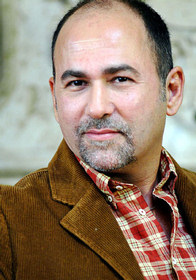
Today I saw the new film of Ferzan Ozpetek. "Saturno contro". Means the saturn is in opposition. Like in the horoscopes. For a long time afterwards I was thinking about his films. I think that he is among the best Italian film directors today though I am not sure if his name or his films are known to English speakers? (In this picture Ferzan Ozpetek).


Ferzan was born in Istambul and came to Italy as a young student in late nineteen seventies. For fifteen years he worked as assistant to different directors including the wonderful Massimo Troisi. In 1997 he directed his first film, "Hammam, Bagno turco" (Hammam - the Turkish baths). "Saturno Contro" that I saw today is his sixth film. I haven't seen all of them, I missed one of them, Harem Suaré that had come out in 1999.

Alternate sexuality is a common thread running through his films and sometimes, I have heard people dismiss him as the director of "gay films", but I feel that this would be reductive way to look at his work.

Alternate sexualities including gays, bisexuals, lesbians, transexuals, all find place in his film world and are portrayed as real people, not as caricatures. Often he mixes the theme of alternate sexuality with other marginalised persons like elderly and urban poor.

Another common theme of his film is that of persons, especially women, who live lives cut off from their emotions and then something happens, that stimulates a radical transformation in the way they see the world and themselves.

Another common theme in his films is that of death, separation, loss and grief, and how we cope with it, how it changes us.

"Saturno Contro" starts with a group of friends. Most of them have crossed forty. David (Pierfrancesco Favino) the gay writer and his companion Lorenzo (Luca Argentero), Antonio (Stefano Accorsi), his wife Angelica (Margherita Buy), and Antonio's mistress Laura (Isabella Ferrari), a Turkish translator Neval (Serra Yilmaz) and her policeman husband Roberto (Filippo Timi), David's ex-boyfriend Sergio (Ennio Fantastichini), an astrolger and drug addict Roberta (Ambra Angiolini) and Paolo (Michelangelo Tommaso) a medical student and an aspiring writer who wants to come close to David.


They meet regularly. Antonio and David are childhood friends but now it is Angelica who is closer to David and Lorenzo. Lorenzo discovers Antonio with his girl friend and does not what to do to protect Angelica. During the dinner, Antonio finds an excuse to go out to meet his girl friend. Then suddenly Lorenzo, who was not feeling too well loses consciousness. Rest of the film is about Lorenzo's coma and then death in the hospital and how David and other friends react to it. (Below from left Roberta, David e Lorenzo).


The film is an exploration of grief, when you suddenly lose the person you love and the world does not have any meaning. Each of them in their own way understands that the pain of David is strongest and yet do not know how to deal with it. It is a very moving film, slow and lingering over the details.

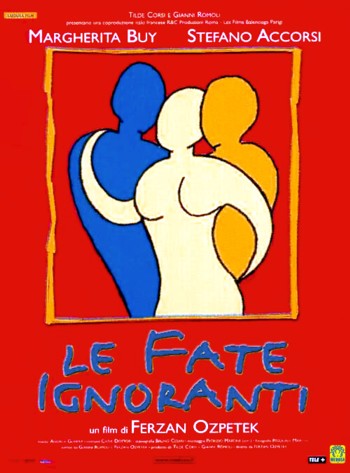
Le Fate Ignoranti (The ignorant angels) was another film of Ozpetek that came out in 2001 and became a popular and critical success. It was the story of a apparently happy and successful couple, Antonia and Massimo. Massimo suddenly dies in an accident and Antonia (Margherita Buy), a doctor is grief-stricken and shocked. Her whole life seems empty and meaning less. One day among Massimo's office things she finds a painting, behind it somebody has written, "From your angel". Suspicious that her husband had an affair, she tries to find out the person who had given that painting to Massimo. That is how she discovers that her husband had a relationship with a man, Michele (Stefano Accorsi) for the last seven years.


Initially shocked and repulsed she can't belive it but then she wants to understand and enters the world of Michele, a house where a group of gays, transexuals and lesbians live together as a community. Michele says, "Don't be angry with me, you will be always his wife. Outside this house I could never be anything for Massimo. I loved him for seven years yet I can't go and cry on his grave". Antonia wants to understand that part of Massimo that she never knew existed. She feels attracted towards Michele but he is gay and slowly she understands that Michele is not the answer to her grief. Learning to cope with her grief, Antonia goes back to her own world. (Below Antonia & Michele)


In 2003, Ozpetek made La Finestra di Fronte (The window in front) about a woman Giovanna (Giovanna Mezzogiorno) with two children, living an unhappy life, her attraction for a young man Lorenzo (Raoul Bova)who lives accross from her house. One day she finds an elderly man who has lost his memory. Giovanna and Lorenzo try to discover about the past and family of the man, discovering that he was put in a concentration camp by Nazis because he was gay and his remorse for his companion, whom he could not save from death. (Below Giovanna & Lorenzo)


In 2005, Ozpetek made his most spiritual film, Cuore Sacro (Sacred heart). It was the story of Irene (Borbora Bobulova), a successful and ruthless entrepreneur, who seems unperturned by the suicide of her old friends because she has taken over their old company. Then while planning to take over an old family home, she discoveres the secret of her mother, who was apparently mentally ill and prisoner in that house. Her encounter with a thief young girl and the young girl's death bring her in contact with the reality of urban poor and her own guilt. Filled with remorse she gives up everything and in a gesture of penitence removes all her clothes in a metrostation. (Below Irene)


If you have not seen any of his films, I hope that this brief discription of his works will make you curious to see his films. I like his gentle way of story telling and his film worlds very much.

Home: Manju Kapur

During the last trip to India, I had bought Manju Kapur's new book, "Home". I had earlier read her "Difficult daughters" and liked it.

Kapur's book is set in Karol Bagh area of Delhi in nineteen sixties and seventies. That was one reason, why I wanted to read this book as I had grown up in the same area and I could identify with some of the characters of the book very easily. In that sense the book does not disappoint. Once I started reading it, I could only stop when I had finished it. Reading words like "Ajmal Khan Road" or the descriptions of sari shops in Karol Bagh, evoked quick images of real places and persons that I had known.


The book is about the Banwari Lal family. The shop owner Banwari Lal, his sons Yashpal and Pyarelal and their wives and children and it explores the world of joint families. This world of joint families is not the large happy make-believe families of Suraj Barjatya films. It is a world trying to grapple with complexities of adjusting your aspirations and individualities with those of the others inside closed walls of the house, facing challenges of generational changes, trying to accomodate growing children in narrow personal spaces and even narrower working spaces.

This world of joint families does have altruistic elders, a mutual support system and intimacy that makes joint family living such a pleasure and a pain, but the book does not dwell much on these aspects, it rather focuses on tensions and rivalaries, almost a darwinian struggle of finding your own space for catching the sunlight and growing up, escaping the shadows of the others, who came before you or who have more rights than you.

The book has a large set of characters, the patriarch, his wife, two sons, their wives and children, a dead daughter and her family etc. The first part of the book focuses on a few of these characters, esepcially on Sona, married to the elder son Yashpal and her sister, Rupa, married to a teacher, Prem Nath. Sona, beautiful, insecure and anxious can't have children while younger brother Pyarelal's ordinary looking wife Sushila quickly has the required sons, Ajay and Vijay. Ten years after the marriage finally Sona has a daughter, Nisha and then a son, Raju.

Death of Banwari Lal's daughter and their decision to take the daughter's son, Vicky in the house with them and Vicky's relationship with Sona, is the subject of the first part of the book. Sona, childless at that time, is expected to take care of Vicky. Vicky's adolescence and his first sexual experiments with his young cousin, Nisha make the family send Nisha to live with her childless aunt, Rupa. Nisha grows up and falls in love with a boy of another caste, and when the family finds out about it, this relationship is quickly snubbed out. Manglik Nisha can't find a husband and remains a spinster in the house, till she decides to set up her own business of making readymade clothes. Success of this business coincides with her marriage to a childless widower and the book ends with her pregnancy and the decision to leave the readymade clothes business.

In terms of characterisations, Kapur paints with a large brush with expressionist brush-strokes, giving a few details here and there and leaving you to fill in the rest from your own imagination. Except for Sona and Rupa, and to a lesser extent, Vicky, Yashpal and Banwari Lal, all other characters in the first part of the book remain shadowy figures. For example, Pyarelal and his wife Sushila, are cardboard characters, there is nothing distinctive about them that you can remember after finishing reading the book. In the same way, the second half of the book concentrates on Nisha, excluding almost everyone else. This helps you to focus on the main story of the book, even as it creates some dis-satisfaction. So compared to another large family story like "A Suitable Boy" by Vikran Seth, here family is just a setting and the story still remains limited to a few main characters and is not a proper joint family saga.

Kapur uses fairly simple language. There is hardly a phrase in the book that you stop to re-read to savour the words construction or profound ideas. Her language is just a tool to tell the story.

There are a few episodes of sex scattered throughout the book. Though it is still does not reach the level of explicit sex in the Harold Robbbins or Sidney Sheldon books written more than thirty years ago, but compared to the staid world of women writers of Indian literature (I confess that I still haven't read anything by Shobha De!), it does seem daring. Vicky's violence on young Nisha or Nisha's own experience with her fumbling boyfriend, both are explicit enough to make us understand why her character feels and behaves the way she does. Another sex scene between Rupa and Premnath, does not serve the story in any way but it makes the two characters more real. The book throws in an occasional "chutiya" in colloquial way probably for authenticity.

Overall, the book is a good read, even if I had liked "Difficult daughters" much more. Once you finish it, it does not leave any strong characters in your mind, rather it is all about persons who were shaped by their destinies and they could do little to fight it or to shape it in their own ways. So, after a few days of reading the book you will just remember that it was a good read, but may forget the characters and the story.

Spirit of Dilli

Delhi was hardly there in the mumbai films, except for that passing shot in front of India Gate or South Block with the rashtrapati bhavan in the background. As someone had cribbed after watching Kal Ho Na Ho, films do tend to distort the geography of cities, and if New York could not escape it, how could Delhi do it! The films are such that you would think that India Gate and Red Fort are close to each other and next to the railway station and the airport, so that if you come to Delhi, you can't avoid passing in front of them.

This year, I have already seen 4 Hindi films where hamari Dilli plays a key role, and the year is not yet over. Perhaps, in 2006 there were other films too, that were based in Delhi, that I have missed. The question I am asking is, which of these films reflected the real spirit of Delhi?

It started with Rang de Basanti. In RDB, India Gate was not just a distant shot seen from the windows of the passing car or autorickshaw but it played an important role in a crucial scene along with the spacious bunglows of the ministers, not too far from it. It was essentially a south Delhi kind of Delhi in RDB, where upper middle class lives. There were a few scenes of old Delhi and the muslim culture but they were more like cameos and didn't affect the overall voice and texture of the film, that remained essentially south Delhi. I felt that, Aamir Khan as the sikh son of a dhaba-owner and his disgruntled companions, suceeded in giving life to the growing up experience in Delhi, I could identify with it. Its language, ambience, people were the kind you find in Delhi.


Then came Fanaa, another Aamir Khan starrer. Here Delhi was just an interlude, a background to the shairo-shayari and songs. The film highlighted the touristy part of Delhi. It skimmed superficially over Delhi, not really trying to look at the life of the city. Inspite of the luminous Kajol, I felt that it was a synthetic make-believe world, not really reflecting anything real about the city or its people.


The third film that I saw was Khosla ka Ghosla. It was a more a west Delhi kind of ambience, people who usually live in Punjabi Bagh or Rajouri Garden. It was also very real. The way neighbours reacted, the way people talked and went around their lives, it was able to catch the spirit of dilliwallas. There was a part of the film dealing with Mandi house and Bhartiya Kala Kendra part of Delhi, the part involving theatre-wallas. This part was slightly less real in the way the two main actors behaved (Navin Nischol and Tara Sharma), but even in these scenes, all the side actors were very dilliwallas. KKG was also quite enjoyable in a Gulzaar-Hrikeksh Mukherjee kind of way, that was refreshing.


Finally the last Delhi-based film that I saw was Ahista Ahista. It was mainly an old Delhi, Chandni Chowk kind of Delhi, around Jama Masjid, Dariyaganj and Red Fort. At times the way the actors (Abhay deol and Soha Ali Khan) walked effortlessly from Red Fort to Niajammuddin or to Qutab Minaar did jarr a bit but overall, the ambience of narrow streets and the muslim culture was quite real. However, the film was marred by the actors, their way of speaking, their general way of behaving, that seemed false and out of place in Chandni Chowk. Abhay Deol is a nice looking guy, reminding me of Dharmendra in vintage films like Bandini, but he did not look like or act like old Delhi person. His dialogues did not ring of old Delhi, they seemed very Mumbaiwalla. His other friends, they seemed as if they had come out of the TV serial Nukkad, falsely nice and synthetic. This does not mean that film was very bad, but in my opinion, it could not catch the spirit of Delhi.


So which of these films did catch the dil of Dilli? I think that the real competition is between RDB and KKG. Ahista Ahista and Fanaa were not about real Delhi. I can't decide between RDB and KKG.

It is difficult to decide, perhaps because the two films look at very different parts, people and cultures of Delhi. These two Delhis are quite similar geographically and do overlap, though obviously RDB is not about everyday places and persons (like the shots behind the airport or the shots at the old monuments, the scenes at India Gate and All India radio), while KKG is about everyday middle class Delhi. On just this basis, perhaps KKG wins for me.

And for you?

A symphony for Bombay

It is a beautiful symphony, played by invisible beings, the kind who walk all around you every day and whom you never see. Perhaps, you are also one of them? Symphony is made even more beautiful because, each of those invisible beings is singing a different song, with a different rhythm.


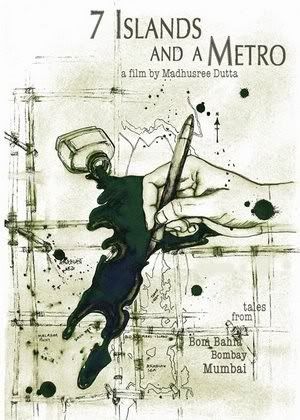
Seven Islands and a Metro by Madhusree Dutta is that symphony. The film was released in some commercial theatres about ten days ago. It is rare that I get to see newly released films but this time, Mukul, my nephew and cameraman for this film, brought me a preview copy. Today, while I was watching it, I wished I had watched it while Mukul was here. In some Dvds there is a director’s cut of the film, where the director explains and talks about the film, while you watch the scenes. If I had watched it with Mukul, I could have had a cameraman’s cut of the film! The film is so beautiful that I really regret not having done that.


Seven islands is about some of the different Bombays that exist for its 15 million inhabitants and for thousands coming here every day in search of a living. Each of them sings their song.

Like the persons who hang at the top of the sky scrappers and clean glass for a living. “I like it up here, there is a kind of peace here”, one of them says.


Like the hundreds of I.D.cards with their pictures, and people standing in queues, answering questions about themselves – name, place of birth, father’s name – in English, Marathi, Hindi, Urdu…

Like the line of cement mixers trailing on the highway like giant snails, their snouts raised up towards the sky to catch the extra-terrestrial sound waves, while helicopter drones above.


Like the girl with grey eyes, who says, “I tell people on the face that I am a bar dancer. I am not afraid. You have to be made stronger to live here. Only money counts”, and suddenly her voice cracks with emotion.

Like angry women protesting against the invasion of UP and Bihar walls, “We’ll butcher you like fish.” Like Kulwant Kaur with icey hands in the story narrated by Manto, who listens to her husband brag about the six he killed and the seventh, a beautiful girl, he wanted to rape. Like the Dawood Bohra bank worker who says, “I was born here in 1944. When he said that you should go to Pakistan, I felt so bad. Why should anyone doubt my patriotism for India?”


Like all those dead and living, living together there in the cemeteries, the Europeans, the Church of England Christians, the Church of Scotland Christians, the Church of North India Christians, the Italian prisoners of war, the Japanese prostitutes and cotton traders, the Chinese.

Like the small window above the graveyard, where a swing is moving in a small room and small feet peep out and go back in. Like the tall and well built Reshma, who talks about her tom-boy days and those trying to dial wrong number with her. She is the stunt women, a celebrity in her area, having done stunts for Hema Malini in Sholay. “Take a look at my pictures. In my time, I was also beautiful, why didn’t I become a heroine?” Like all those small, thin men with faces burnt by sun, who rummage through garbage, who bulldoze houses of poor like themselves, and who talk of hunger, “You can wake up hungry in Bombay but you are ready for hard work, you will not go hungry to sleep.”


Like the young man selling chai during the night. Even beggers and vendors buy the tea from them. “They can deflate the tyre of my bicycle, but I can’t give bribe. I don’t earn enough. They can do what they want.” Another talks about his love for the girl from the other caste and how he was made to leave for Bombay while the girl committed suicide. “For a days labour, you earn 15 rupees in the village. Here I can spit out betel for 15 rupees in a day.”

Cruel, funny, tragic and comic, they all mix together in a never ending kaleidoscope, each staking their claim to life. The young boy extolling the virtues of vegetarianism, almost unaware of the violence inherent in his words. Or those who talk of the riots and because their religion does not allow them to hurt others, how they gave a couple they had discovered to others “more suitable for the job”. And the hope in their eyes that refuses to die. My future will be better, they all believe. In any case, life here is much better than what ever, I left behind, they argue, perhaps more to convince themselves than others.


The only discordant note in the symphony comes from the comments of the two writers, Sadat Ali Manto and Ismat Chugtai, and the effort to add abstract symbolism to the film, like broken picture of Gandhi or the red shawl. Harish Khanna as Manto is suitably intense and Vibha Chibbar is a delight to watch, but their philosophical posturings sound false and superfluous like the burqa clad women pushing carts with polyfoam Mumbai maps or the burning kite or the red coloured water with I.D. pictures floating in it. Words of ordinary people are like swords, cutting and cruel unapologetically. “No more Bihari and UP walla bhaiyas here, let them stay where they are”, says a woman bluntly. There is no need to add abstract symbolism, it is already there in plenty.

They all say that it is about money. No one talks about community, the relationships. After leaving the small towns, what communities they create? What relationships sustain them and replace the warmth they left in home towns? The film does not explore them but you get glimpses of it, like the boy running along the train, who is pulled in by others hanging at the door.

The idea of watching a documentary film for 100 minutes is a bit daunting but once the film starts, it is difficult not to get involved and forget time. Bombay never looked so beautiful as it looks in the rain scenes. Music, sound, images, people, everything fits well together.

In the end, I was feeling a bit jealous about Bombay. I have been there a few times, but my heart is in Delhi. I wish someone had made a symphony for my Dilli like this!

Below, some more stills and credits of the film.


We don't need bhaiyyas, she says

I.D. cards and pictures, leit motif of the film

Testimony of the riots

Reshma, the "famous" stunt woman from Bollywood

Vibha Chibber (Ismat Chugtai) and director Madhusree Dutta


Seven Islands and a Metro
Director: Madhusree Dutta
Actors: Harish Khanna & Vibha Chibbar
Cameraman: Avijit Mukul Kishore
Editing Reena Mohan, Shyamal Karmakar
Dialogue: Sara Rai
Sound design: Boby John
Music: Arjun Sen

Contradictions

After a lazy sunday afternoon nap, we decided to watch Syriana. I was still a bit sleepy and I had been hoping for something not too complicated, so probably some bits of Syriana passed over my head without registering. The film is complicated with different simultaneous and parallel story lines spread over different continents and different languages, English, Farsi, Arabic and Urdu. The main aim of the film is to show how American multinationals involved in petrol with active support from different American institutions are willing to go to any length to keep on their profits, including assassination of those who try to fight against their power. At the same time, short term thinking of USA forces sometimes provide sophisticated weapons to those who later use them against American interests.

I was thinking of how so many Indian films are now equally vehement in showing nexus between corrupt politicians, underworld and other corrupted state institutions.

It is a victory of freedom of press if cinema can show such realities in so clear terms, pointing accusing fingers at the powers. Yet, the fact that films like these can be done time and again and in spite of all the accusations, that do seem believable, nothing changes. Voters go on electing same persons, those same persons keep on doing what they were doing and public does not care. Then periodically there will be some ritualistic cleaning with some weakened power brokers who are sacrificed to satisfy the public hunger for justice and everything can continue as it was. It sounds very horrible and cynical and yet probably an accurate description of how "real" life is.

Coming back to Syriana, George Clooney must be passing though that "I am not just a beautiful body, I am a good actor" phase. It does seem unbelievable, his perplexity and confusion, after being a secret agent for all his life in places like Beirut. The decision of Pakistani boys to be suicide bombers is also not explained properly since at least one of them is not convinced about religious dope peddled by his instructors.
*****

I always had an admiration for Isreal. There was a long time that I was convinced of having been a jew in a previous life, who had lost his life in the holocaust. And I am deeply distrustful of religious fundamentalism of the islamic kind. Yet, in the fight between Isrealis and Palestinians or Lebanese, I feel that Isreal is renegating its legacy of suffering and is behaving similar to the oppressive forces in nazi Germany, uncaring about the countless civilians that its forces seem to crush with uncaring abandon. Probably this is because the fight is not perceived as between jews and muslims but is seen as unequal between uncaring powerful isrealis and desperate palestinians.

I find deeply distasteful the idea of covering women in dark long veils, hiding them from the public eye and yet I love old muslim social films like Mere Mehboob, Pakeezah and Chowdhanwi ka Chaand, with youth shayars falling in love with burqa clad beauties.

It is so difficult to understand my own contradictions!

Masala addiction

There is something in the spices, in the masala. You taste it a couple of times and it enters your blood. The cells taste the fragrances enclosed in its molecules. And, then you can't resist its call. Days can pass without feeling the yearning for it. Yes, I have outgrown it, you think. But the yearning comes back suddenly while you eat the wholesome nutritious, bland, spiceless food. You are a masala lover once, you are a masala junkie forever!

Hindi films are like that. Once you have tasted them, you can't forget them. In spite of their silliness, their exagerated emotions, their illogicalities, their absent storylines, their corny songs. No, they are stupid, you tell yourself. Give me a hollywood blockbuster any day, I tell myself. A nice French or Italian flick. And then suddenly one evening, you are running to your friendly neighbourhood pirated video store, the hollywood blockbusters forgotten, your heart yearning for some song and dance masala laced with crying mothers, lovetorn couples, destines singed with unsurmountable barriers, that yet once again avoid the tragedy just by the nick. The wonderful world of Bollywood.

And then I found bwcinema dot com. Goodbye to pirated disks, that suddenly block in the middle of Shahrukh Khan telling Kiran Kher, "Mother, I am back!" You just need a good connection and you can watch all the masala without going out of your homes. Three days of unlimited films for as low as 3.99 dollars, the site said, and the suddenly the four day long weekend had found its purpose. And perhaps, this time, I am not going to fatten the Bangladeshi or Pakistani shop owners and be a traitor to India, I had thought. Perhaps, the film producers will get a percentage for each download.

I started with Morning Raga with its lovely carnatak music and a wonderful Shabana Azmi. IFFA awards and Filmfare awards followed. The first day ended with the reluctant patriotic fervor of Rang de Basanti.

I hardly slept that night, waking up at five in the morning to watch Ankahee, the Vikram Bhat-Sushmita Sen autobiography. And then I crashed, falling down asleep for eight hours straight. Chup Chup ke with crazy Paresh Rawal and Rajpal Yadav accompanied my hurridly cooked chinese noodles. A pity they had spoil it with Shahid Kapur and Kareena.

The third day started with Corporate and I was starting to get over my yearning. I tried to follow it with Kabhi Alvida Na kehna, that had lousy print and even worse sound worthy of friendly neighbourhood pirate video shop. Is it legal, I asked myself? I mean, four days after the release of the film, here they are showing it on internet with a pirate print and they are based in USA and no one can do anything about it? May be this site is run by sons of Al Capone? Anyway, I gave up after fifteen minutes. Then I tried with Onkara. This print also looked pirated with the screen wobbling, as happens with camera prints, when someone tries to shoot the film with a handheld handycam in a cinema hall. So I shifted to Fanaa. This time the print was good even if the film's faked emotions were irritating in spite of wonderful Kajol. Finally to finish the feast, I had Chicken Tikka Masala, all about British humour about parents trying to marry off their gay son.

Now I feel like puking. My head hurts. If I look at the TV screen, red and blue spots float in front of my eyes. Wish I can burp. It is indigestion. I just want to curl up in my bed and not to think of any masala movie for a year. The yearning is gone and it seems it won't be back for long long time. Now from tomorrow, I can go back to my sane hollywood blockbusters and the intelligent Almodovars.

Hindi films? I screw my nose. They suck, I tell myself. Till the yearning comes back again, I am free.

Indian babe, videshi aebs?

In the beginning of March, I had been in Delhi and that was the opportunity to buy some new DvDs of the new Hindi movies. Then, finally I had a free weekend and that was an opportunity for watching some films. One of these films was Neal & Nikki from Yash Raj films.

When I started to watch the film, I was aware of the bad reviews this film had got for its excessive nudity and bad "acting" by Tanisha. I had read how the film puts off family audiences used to the sweet desi love stories that are a trademark of Yash chopra and Aditya Chopra films. And, the reviews said that Uday Chopra has a big Shahrukh complex.

So, when I started watching the film, I didn't have high expectations, I was quite prepared to switich off the DVD player and go to sleep if the film got too bad.

The film is indeed bad, but not in the way, the reviews in India explained it. And, I didn't switch off the DvD, I watched it right till the end.

Lets start with the story. Neal is going to get married and wants to have some fun, so decides to go to Vancouver, where he meets Nikki, who throws a spanner in his wheels everytime he is getting in the pants (or the skirt) of girl. Then Nikki asks him to act as if he is in love with her, so that she can take revenge on her ex-boyfriend, Trish. Finally between Neal and Nikki kuch kuch hota hai and they end up in bed, but the guys don't communicate very well and go their separate ways. Destiny brings them together because Neal is engaged to Nikki's cousin, who conveniently loves someone else so that finally N&N can clarify all their doubts, get married and live happily ever after.


Comments: The film is for testosterone high adolescents and there are any number of raunchy films like that with corny jokes and double meaning dialogue. The only difference is that they are american films. In Indian films, when they do have raunchy films for adolescents (and repressed men), the wives are all nice bhartiya naris and the naughty sex element is provided by other women after whom the men lust.
I can understand their dismay that characterization of a pure bhartiya nari, a wife material, has been mixed up with the sexy other woman. She swigs vine from the bottle, points at the man's crotch and says that she wants a cork-screw, threatens that she is going to cut off his tiny little ... Not only, she wears skimpy clothes like the ones worn usually by the videshi blondes, doesn't mind showing off an oral sex misunderstanding & goes to bed with the boy she likes without marriage! And, then comes back to kiss her man hard on the lips. Must be a nightmare to the fragile male ego!
Films like this are very common, except that they are all american films and not desi films. So if it is such a liberation film for the bhartiya nari, why didn't I like it?
Because, it sucks. The story I mean.
6 May 2006
I was supposed to finish this mail long time ago. Any way, I didn't and now I have forgotten all about Neal & Nikki! Perhaps, it is better this way.